Key takeaways
- Porcelain is dense and water-resistant; ceramic is lighter and easier to cut.
- Larger tiles mean fewer grout lines; smaller tiles add grip in wet areas.
- Match slip resistance to the room.
- Grout color and joint size change the look.
Porcelain, ceramic and stone
Porcelain tile is dense, hard and nearly waterproof, which makes it ideal for floors and wet areas. Ceramic is lighter and easier to cut, and fine for walls and lighter-use floors. Natural stone brings unique character and needs sealing.
Check the manufacturer's rating for floor use.
Size and pattern
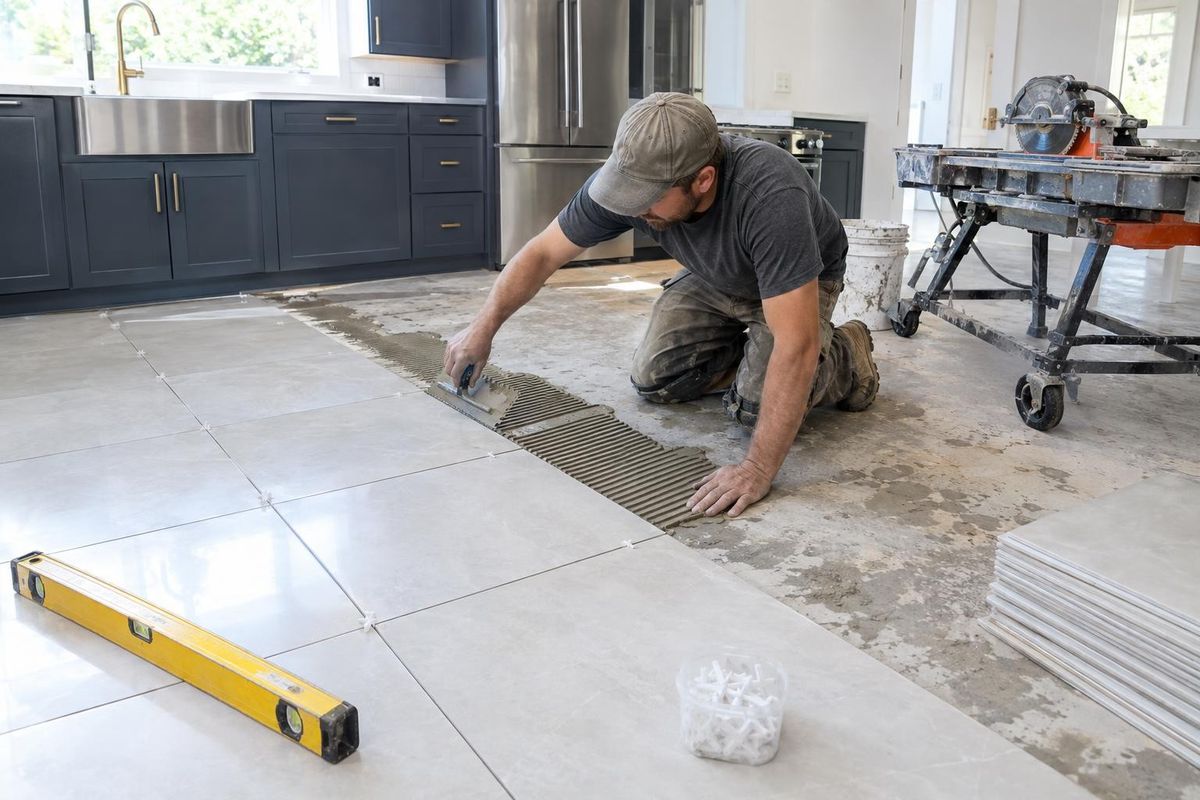
Large-format tiles make a room feel open and have fewer grout lines but need a very flat floor. Small tiles and mosaics follow slopes, like shower floors, and add traction. Patterns such as herringbone and offset layouts change the look dramatically.
Rectified tiles allow thin grout joints.
Slip resistance and finish
A glossy floor tile can be slippery when wet. Look for a textured or matte finish and a rating suitable for bathrooms and entries.
Showers often use small mosaics for grip.
Grout and maintenance
Grout color can blend with the tile or contrast with it. Epoxy grout resists stains better than cement grout, and sealing helps cement grout stay clean.
We install and repair tile across Nashville and Middle Tennessee.
Quick answers
What tile is best for a kitchen floor?
Porcelain is a popular choice for durability and easy cleaning.
Does tile need sealing?
Porcelain does not. Natural stone and cement grout usually do.