Key takeaways
- Solid hardwood can be refinished many times but moves with humidity.
- Engineered hardwood is more stable and works over concrete and radiant heat.
- Both can be beautiful, wide-plank floors in real wood.
- Your subfloor and moisture conditions often decide it.
What solid hardwood is
Solid hardwood is a single piece of wood, usually three-quarters of an inch thick. It is nailed to a wood subfloor, can be sanded and refinished many times and can last for generations if cared for.
Because it is one piece, it expands and contracts with humidity, so it needs stable conditions and a wood subfloor above grade.
What engineered hardwood is
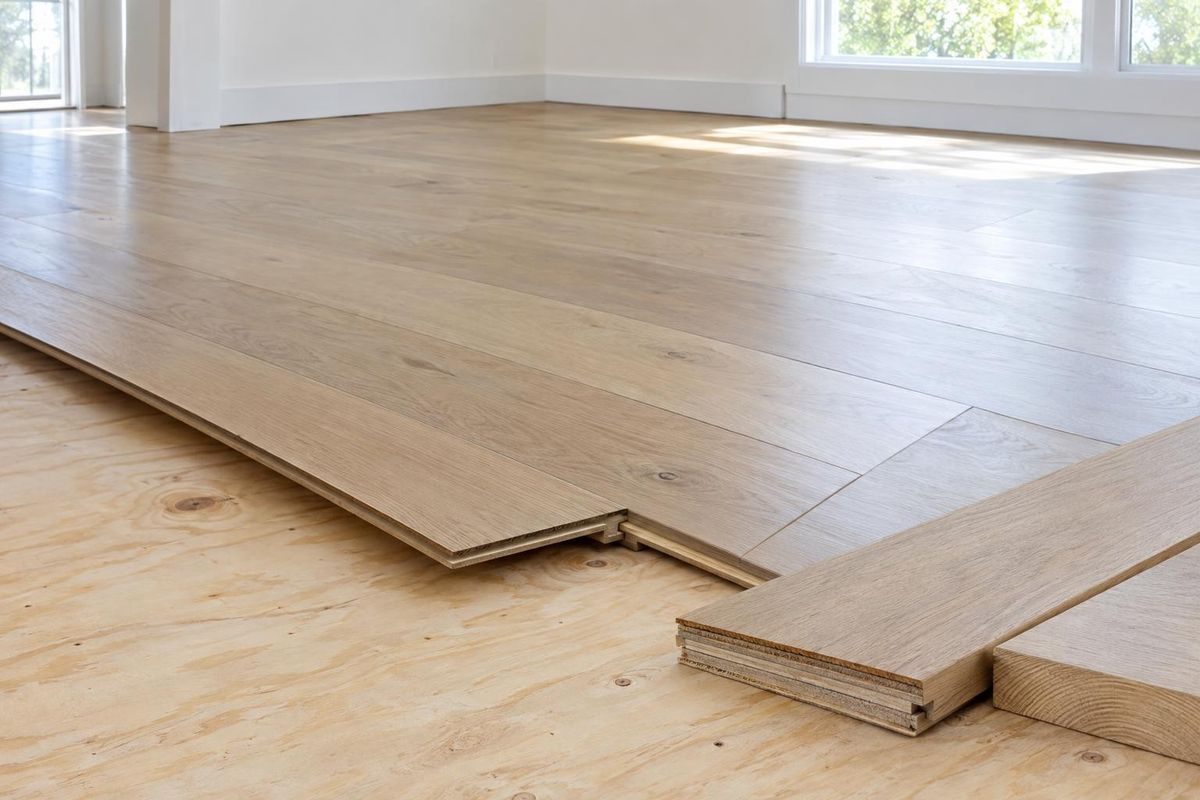
Engineered hardwood has a real wood surface bonded to a layered core. The cross-layered core resists swelling and shrinking, so the floor stays flatter through Tennessee's humid summers and dry winters.
It can be floated, glued or stapled, and works over concrete slabs and radiant heat. Thicker wear layers can be refinished once or twice.
How to choose
Choose solid for above-grade rooms with a wood subfloor when you want the longest-lived, most refinishable floor. Choose engineered for basements, slabs, condos, radiant heat and wide planks that need extra stability.
In Nashville, many homes mix them: solid on the main level and engineered in the basement.
What about appearance and sound
Quality engineered flooring is almost indistinguishable from solid once installed. Floating installations can sound hollow without good underlayment, while glued floors feel solid underfoot.
Samples on site help you compare color and feel.
Quick answers
Can I refinish engineered hardwood?
Often once or twice, depending on the wear layer thickness.
Which one is the better value?
The answer depends on species, width and brand. We can compare options for your project.